Press
Energy management where business reality meets sustainability
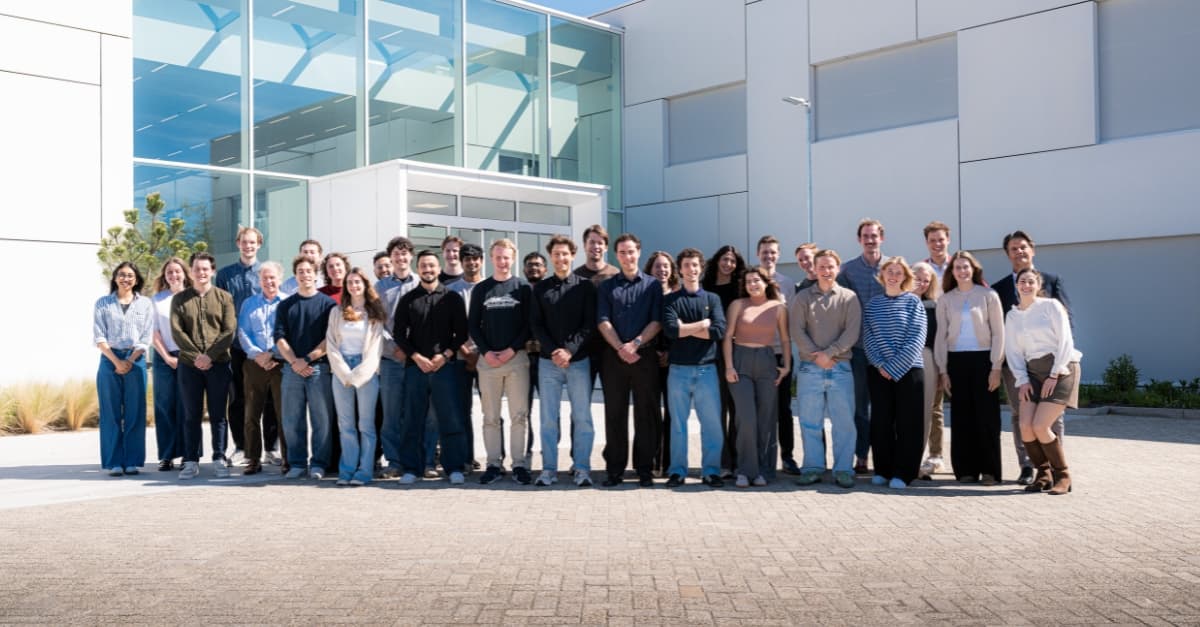
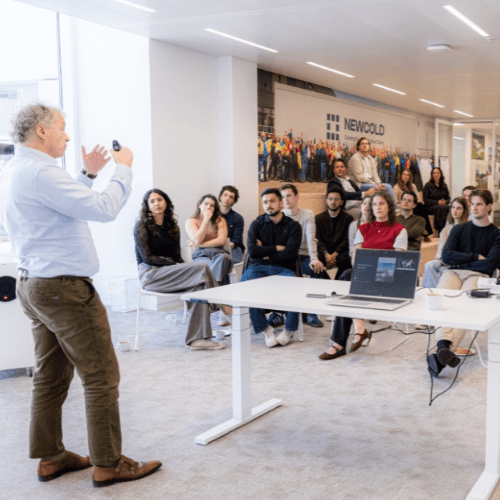
Students from the TU Delft Faculty of Technology, Policy and Management recently spent a full day at NewCold’s Global Innovation and Support Center in Breda to explore how energy management and sustainability are applied in a complex, real world operational environment.
The visit was designed to go beyond theory. Instead of treating sustainability as a standalone topic, the day focused on how energy strategy directly supports business continuity, cost control, and long term growth in temperature controlled logistics.
Designing for energy resilience from the start
The morning sessions introduced NewCold’s mission and operational model, with a strong focus on the design and operation of high bay cold storage facilities. Students learned how building design, automation, and energy strategy are closely linked, particularly when operating in energy intensive environments and congested grids.
NewCold shared concrete examples of how on site energy solutions are integrated into daily operations. These included solar PV installations, combined heat and power systems, battery storage, and active grid management. Rather than presenting these technologies as isolated investments, the sessions showed how they work together to manage rising energy prices, reduce dependency on the grid, and ensure continuity of operations in challenging market conditions.
A key message throughout the morning was clear: sustainability at NewCold is business critical. Energy decisions are not driven only by climate targets, but by the need to keep warehouses running reliably, predictably, and efficiently over the long term.
A global perspective on energy decisions
Beyond the local context of Breda, students were introduced to NewCold’s global energy portfolio. Examples from multiple regions illustrated the scale of NewCold’s operations and the system level impact of energy decisions across a global logistics network.
By connecting local energy solutions to global strategy, students gained a broader understanding of how regional differences in regulation, grid capacity, and market conditions influence energy choices. This perspective highlighted that effective energy management requires coordination across sites, functions, and geographies, rather than one size fits all solutions.
From technical insight to lasting change
In the afternoon, the focus shifted from strategy and technology to execution. Students worked on a real case from one of NewCold’s sites, a fully automated, high capacity cold storage facility with significant energy demand.
Using real input, a thermal site inspection, and identified site defects, the teams were challenged to develop an improvement plan. However, the assignment deliberately moved beyond technical optimization.
The central question was not how to change systems, but how to sustain change in day to day operations. Students were asked to consider how known technical opportunities can be translated into behavior change, clear ownership, and lasting improvement at site level. This meant thinking about roles, responsibilities, incentives, and practical constraints faced by operators, maintenance teams, and site management.
Practical, implementation focused outcomes
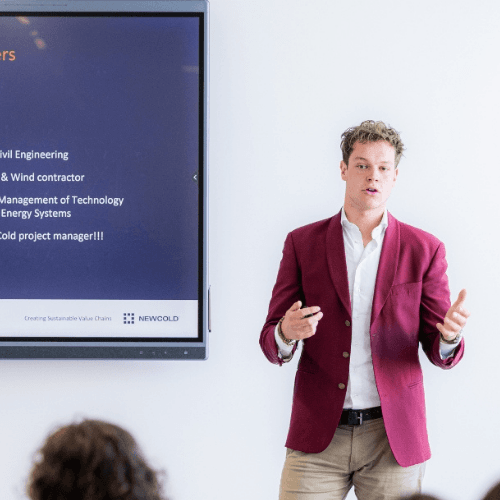
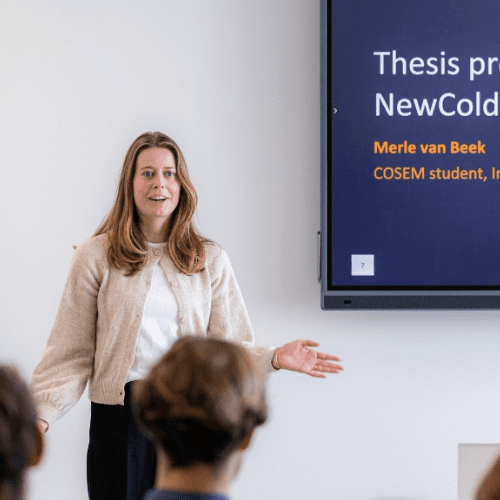
Working in teams, the students developed implementation focused plans that addressed not just what should be improved, but how improvements could be embedded into daily routines. Their short pitches emphasized practical steps, assumptions, and the human side of energy management.
Throughout the case work, strong attention was given to what makes change actually work in operational environments. Topics such as visibility of energy impact, accountability, and consistency in execution featured prominently in the discussions.
Bridging theory and practice
The day in Breda offered a clear example of how academic knowledge can be applied in real operational contexts. By exposing students to both the technical and organizational aspects of energy management, the visit demonstrated that successful sustainability outcomes depend as much on people and processes as on technology.
“We like to open our doors and show how sustainability really works in day‑to‑day operations. These sessions are about learning together and preparing the next generation for real‑world challenges,” adds Bram Hage, NewCold CEO & Founder.
For NewCold, the session reinforced the importance of integrating sustainability into core business decisions. For the students, it provided valuable insight into how future leaders can contribute to meaningful energy transition within complex, energy intensive industries.
The collaboration highlighted a shared ambition: turning energy strategy into real, sustained operational impact.

NewCold offers exciting and fulfilling career opportunities around the world.